The Pentagon’s push to transform our defense forces is coming head-to-head with the inertia of outdated acquisition practices, fragmented data systems, and siloed decision-making. The solution to these issues must be a decisive shift toward integrating AI-driven tools that enhance mission readiness at speed and scale. In a recent Roll Call op-ed, former Representative Chris Stewart called AI the “decisive factor in whether we win or lose the next fight.”
Time is of the essence. Competitors like China have already embedded AI deeply into their military strategy, from autonomous drone swarms to AI-enabled command systems. If the U.S. doesn’t accelerate AI integration into readiness operations, it risks falling behind—not only in technology but in the very agility required to succeed in any conflict.
Prioritize Mission Outcomes, Not Technical Checklists
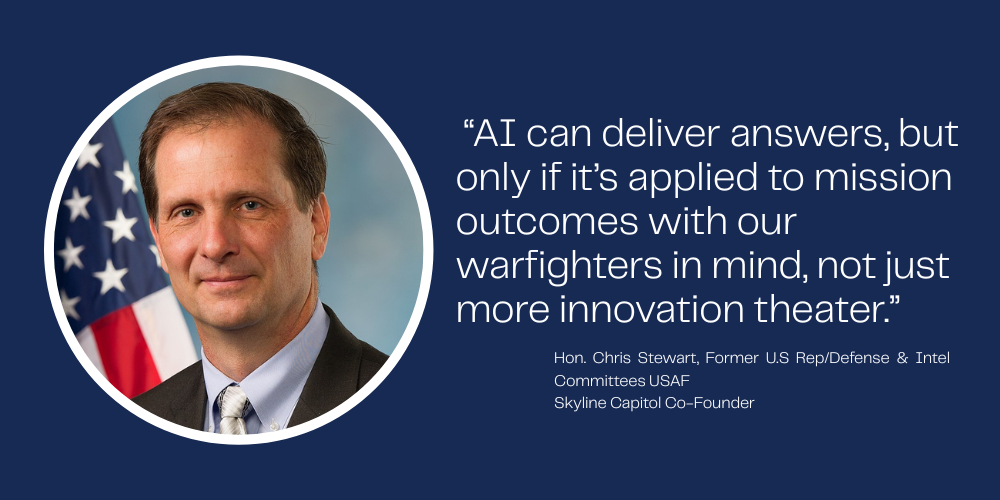
According to Mr. Stewart, who will be speaking at the upcoming Frontiers of AI for Readiness Summit, “AI can deliver answers, but only if it’s applied to mission outcomes with our warfighters in mind, not just more innovation theater.”
AI in military applications involves the integration of AI-driven systems that allow for the analysis of massive datasets and capture insights that improve decision-making. When applied correctly, AI helps commanders and operators see around corners, identify breakdowns before they happen, adjust routes before disruptions hit, and reallocate resources to meet mission needs.
Virtualitics is already helping units move in this direction. Instead of waiting months for analysts to interpret data manually, operators can use AI-powered Integrated Readiness Optimization applications to visualize patterns in readiness, identify gaps, and simulate actions. This shift empowers decision-makers to address mission-critical needs proactively and in real-time.
By fusing data from disparate sources—maintenance logs, supply chains, and personnel systems—Virtualitics delivers a unified, interpretable picture of operational health with built-in explainability. This means operators don’t need a PhD in data science to trust the insights. For example, if AI flags a drop in unit readiness, the system also shows, in conversational language, which variables—such as personnel or asset shortages—are driving the decline. This transparency is critical for building confidence in AI-supported decisions.
Find Pathways to Match the Speed of the Mission
But technology is only as fast as the system that delivers it. As the Secretary of Defense’s recent call to action emphasized: “To build a leaner, more lethal force, the Army must transform at an accelerated pace by divesting outdated, redundant, and inefficient programs, as well as restructuring…acquisition systems.”
This is why investments are being made by upstart companies like Virtualitics to streamline procurement and accelerate delivery through trustworthy pathways like GSA Schedule 70, NASA SEWP, SBIR and STTR, and the Tradewinds Solutions Marketplace. With these contracting vehicles, operators don’t have to face years-long acquisition timelines. Instead, they get the AI applications they need quickly and without bureaucratic lag.
Act Now, Iterate Fast
Let’s be clear—our adversaries aren’t waiting for us to figure this out. They’re moving at an unbridled pace. We can’t win tomorrow’s conflicts with yesterday’s tools, but, fortunately, the right technology exists.
By focusing on mission outcomes, integrating explainable platforms, using rapid acquisition paths, and deploying modular solutions, the military can embed AI into readiness operations without delay. The pathway is clear. What’s needed now is the will to move—fast, smart, and mission-first.
To learn more about how to accelerate your AI journey, join us at the Frontiers of AI for Readiness Summit on September 4, 2025, where the Honorable Chris Stewart and many other mission AI experts will be speaking.