
With the passing of the FY26 National Defense Authorization Act, the DoW signaled that America is officially changing how it acquires and fields warfighting capabilities.
The new law comes on the heels of a recently released DoW memo formally retiring the traditional and process-driven Defense Acquisition System in favor of a new construct designed for a new era: the Warfighting Acquisition System (WAS). It’s a model built on swiftness, agility, outcome-orientation, and industrial-base resilience.
For Virtualitics, these reforms represent a moment to lean in. To double down on AI-powered analytics, decision support, and cross-domain integration. To bring clarity where there is complexity, to reveal risk before it becomes a crisis, and to give decision-makers insight when it matters most.
In 2026, the defense community faces a rare chance to align technology, industrial capacity, and policy around this new unified vision of rapid, intelligence-driven capability delivery.
A Defense System in Motion
Gone are the slow-march timetables and multi-year development cycles. The NDAA demands that in their place, we have accelerated delivery, flexible contracting, and a willingness to accept more risk to deliver capability faster.
This policy shift matters enormously. For decades, defense acquisition has struggled with bureaucratic drag, which not only hindered defense innovation, but also led many promising technology companies into the “valley of death” (a key topic at this year’s FAR Summit).
In contrast, the NDAA is designed to ensure that warfighters receive urgently needed capabilities—whether its software, sensors, munitions, or logistics solutions—with a sense of urgency and purpose. To support this, the DoW is signaling openness to new suppliers, new technologies, and new investment models, including private capital that can accelerate the growth of a more resilient industrial base.
This mindset is reinforced by the reshaping of the DoW’s Critical Technology Areas (CTAs), which has been narrowed down to six pressing priorities. Of those, there are two in particular that I see defining the operational landscape ahead:
- Applied Artificial Intelligence (AAI) — in alignment with the White House AI Action Plan, the DoW is now focused on the “rapid integration of AI into all manner of…operations to achieve efficiency and decision superiority.”
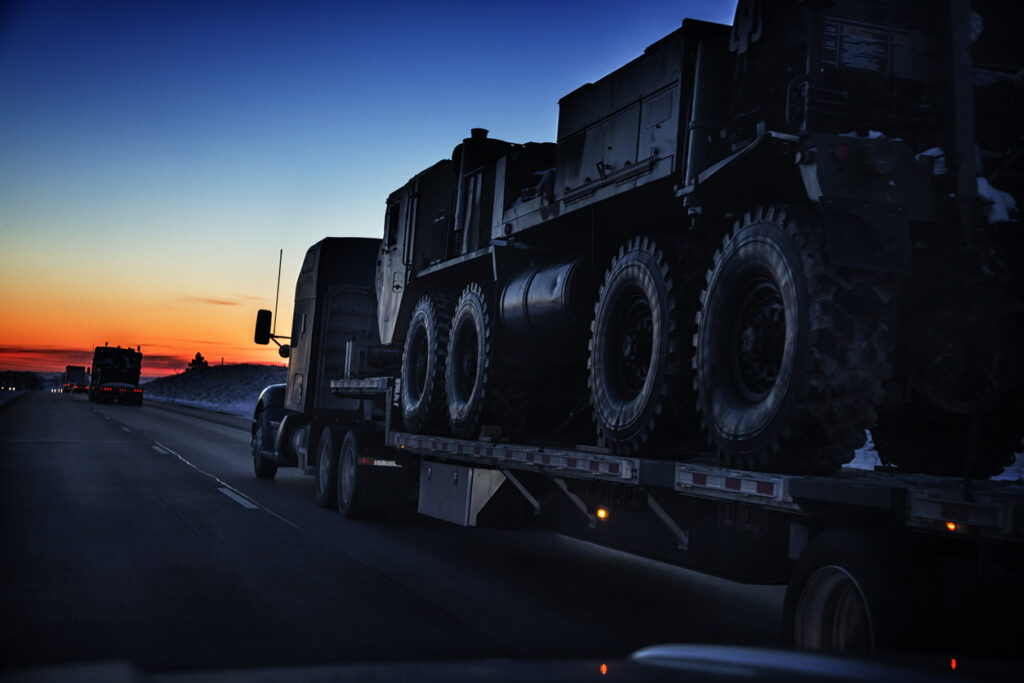
- Contested Logistics Technologies — the LOG CTA recognizes that future conflicts may feature disrupted supply lines, denied mobility, and the need for in-theater self-sufficiency, leading to a need for more data-driven logistics management tools.
The implications of these changes are profound. Both reforms point toward a government that no longer sees AI as experimental, but as foundational to command-and-control, contested logistics planning, and enterprise-wide readiness.
Four Forces That Will Shape 2026 (And How Virtualitics Helps)
Both the NDAA and WAS transformation are recognition that in a world of innovating competitors and contested domains, the American defense industry must be prepared—and data is key to achieving this.
At Virtualitics, our goal is to empower organizations to solve complex, mission-critical problems with AI. In this new era of AI-First defense, we believe our capabilities align closely with the DoW’s emerging needs, especially as we look ahead to how they are shaping the industry’s 2026 priorities.
1. The Acceleration Imperative
The commitment to “speed to capability” means that development cycles must compress, prototyping and incremental delivery need to increase, and fielding timelines will tighten significantly. It also means that our warfighters can move faster on the battlefield, especially in munitions acceleration and critical asset mitigation efforts.
That is exactly where data-driven analytics and AI-enhanced predictive insight can deliver value. Virtualitics—particularly our mission-tuned agents for advancing readiness outcomes—is uniquely positioned to help the DoW with rapid interpretation of intricate datasets, proactive risk mitigation, issue prioritization, and more, enabling commanders and operators to swiftly act before disruption becomes a crisis.
2. A Redefined Approach to Risk
The WAS reform acknowledges that speed requires accepting calculated risk. This means earlier deployment of advanced technologies, but also a greater need for thoughtful guardrails, stronger assurances, and real-time monitoring.
AI systems will be required to not only deliver advanced intelligence, but also support accountability, interpretability, and traceability. Building trust with AI insights will matter more than ever. With Explainable AI built into every one of our Integrated Readiness Optimization (IRO) solutions, Virtualitics is ready to help analysts and planners better manage risk, understand how the model came to its conclusions, and use natural language to explore the data even further.
3. Integration Across the Enterprise
The LOG CTA foresees the need for more agile logistics management. Data must stretch across operations, departments, and the battlefield, and the platforms that unify all these domains will be indispensable.
Virtualitics’ AI solutions can help integrate disparate logistics data—from transportation and warehousing to maintenance logs and operational tempo—and generate insights to support more resilient logistics strategies. In both contested and non-contested environments, our goal is to give decision-makers more clarity and confidence when the unexpected happens.
4. A Broader, More Diverse Industrial Base
As a result of the NDAA, asymmetric upstarts will undoubtedly form a larger share of the defense ecosystem. The U.S. government has signaled that it wants creative investment, modularity, and engagement with a more diverse industrial base. As such, collaboration will be the defining characteristic of the next-generation industrial base.
That means defense-oriented analytics companies like Virtualitics must work together, not only with legacy primes, but also logistics specialists, supply-chain firms, SMBs, and commercial tech innovators, to support a more resilient and dynamic industrial ecosystem. An ecosystem that can support this next era of warfighting.
The New Horizon for Defense Innovation
The reforms of 2025 were not incremental changes—they were a hard reset on our acquisition and operating procedures. They signaled a Department that’s willing to transform itself and challenge the industrial base to evolve with equal urgency.
Even as we embrace this transformation, we must acknowledge the challenges ahead. Achieving accelerated timelines and risk tolerance also requires oversight and expert partnership. The future of the warrior ethos will depend on companies like Virtualitics to not only deliver fast, but deliver right.
We will continue to ensure that we’re making analytics approachable and accessible for the DoW and built with the security, integrity, and traceability to meet this need. Going into 2026 and beyond, we stand ready as always to adapt and continue strengthening America’s warfighting advantage.