By Vice Admiral (Ret) Collin Green, U.S. Navy
Why Logistics Drives Readiness
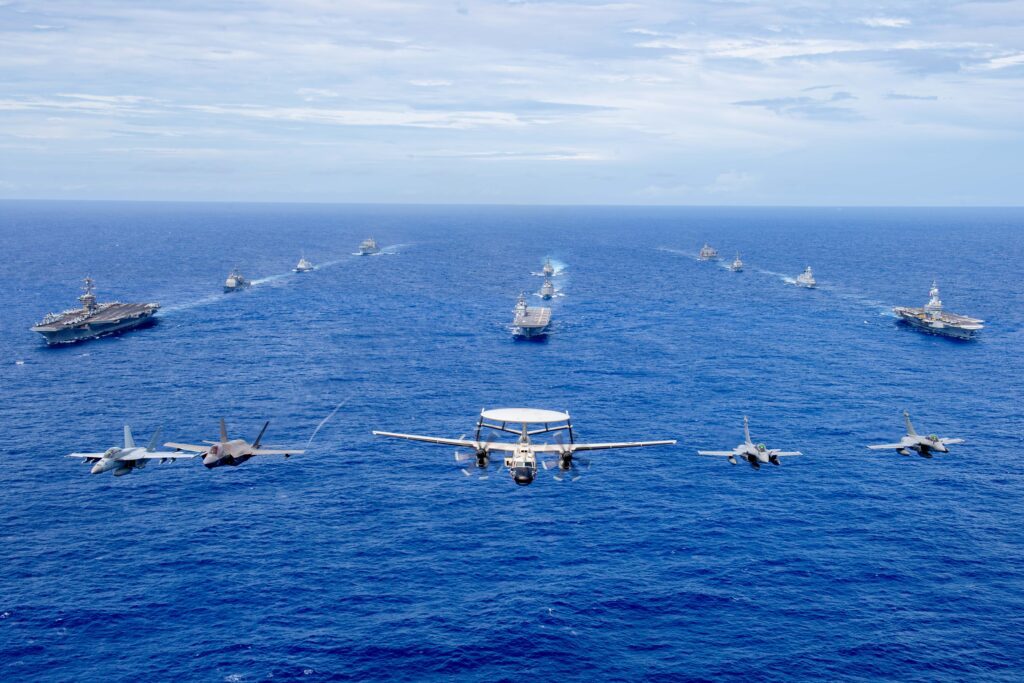
The Indo-Pacific is the most logistically complex region the U.S. military operates in – vast distances, limited infrastructure, and constrained access make readiness a constant challenge. In this environment, logistics doesn’t support readiness; it defines readiness.
As the U.S. military moves toward more distributed operations, sustainment planning is increasingly treated as part of operational design. Exercises such as Operation Pathways underscore this growing recognition within INDOPACOM: the ability to sustain forces at scale, over time, and under pressure is inseparable from operational effectiveness.
Discussions at the 2026 Pacific Operational Science & Technology (POST) Conference reinforced this point. Speakers emphasized that logistics in the Indo-Pacific cannot be treated as a background function — it must be planned and evaluated as a core component of operational success.
Predictive logistics strengthens this link by enabling planners to see risks earlier, test tradeoffs, and protect missions before problems emerge.
Why Traditional Logistics Models Break Down in the Indo Pacific
Traditional logistics models assume predictable timelines, steady access, and stable infrastructure — none of which can be counted on in the Indo-Pacific.
Key challenges include:
- Long, vulnerable lead times for parts and fuel.
- Fragile depot and maintenance capacity that cannot surge easily.
- Fragmented visibility across joint and allied supply chains
In contested conditions, small sustainment delays create rapid operational effects: a late part becomes aircraft downtime, downtime becomes fewer sorties, and fewer sorties reduce deterrence.
From Historical Data to Forward-Looking Decisions
In the Indo-Pacific, readiness can no longer be assessed by looking backward – it must be continuously evaluated against what comes next. Rather than relying solely on historical data, planners can use predictive insights to better understand force-level readiness and to:
- Identify shortages before they impact mission availability.
- Forecast depot and maintenance workloads under different tempos.
- Model cascading supply chain delays.
AI-powered analytics make this possible by continuously analyzing maintenance data, supply availability, and operational demand signals. These systems help planners evaluate proactive actions, such as:
- Repositioning stock closer to likely points of need.
- Adjusting repair schedules to preserve high-value platforms.
- Prioritizing resources based on operational impact, not just efficiency metrics.
These capabilities strengthen distributed logistics concepts essential to the Indo-Pacific.
Several POST sessions also repeatedly emphasized that commanders need more than retrospective reporting. They require tools that help them understand how logistics decisions affect future operational outcomes, enabling faster and more informed planning under uncertainty.
Shared Visibility and Allied Sustainment as a Force Multiplier
Conference discussions also highlighted the growing importance of allied sustainment networks across the Indo-Pacific. With distributed operations spanning thousands of miles, readiness increasingly depends on coordination across coalition logistics systems.
Allies such as Australia, Japan, and the Philippines play a central role in strengthening this regional resilience. When sustainment data is shared across partners, planners gain a clear and more complete picture of logistics capacity across the theater, enabling more coordinated planning and resource allocation.
This coordinated visibility enables:
- Improved collective visibility into parts availability, maintenance capacity, and transportation constraints across the coalition network
- Coordinated stockpiling and repair strategies across allied locations
- Greater mutual resilience during operational stress or supply disruptions
Make Readiness a Strategic Advantage
In a region defined by vast distances, contested access, and rapidly shifting operational demands, commanders cannot rely on static sustainment plans.
They require environments that continuously assess sustainment risks, evaluate tradeoffs, and help planners preserve readiness under uncertain conditions.
Predictive logistics enables this shift. By combining predictive analytics, AI-driven decision systems, and human oversight, sustainment planning becomes more proactive and resilient.
When logistics decisions can be anticipated, modeled, and adjusted earlier, readiness becomes more than a status report—it becomes a strategic capability that helps commanders sustain operational tempo and maintain decision advantage across the theater.
Collin Green is a retired U.S. Navy Vice Admiral and a member of the Virtualitics Board of Advisors, with decades of experience leading Special Operations supporting Naval initiatives in INDOPACOM and other Combatant Commands. This experience enables him to understand the region’s scale, sustainment challenges, and operational demands and informs his perspective on maintaining readiness in one of the world’s most complex theaters.